

Maypole
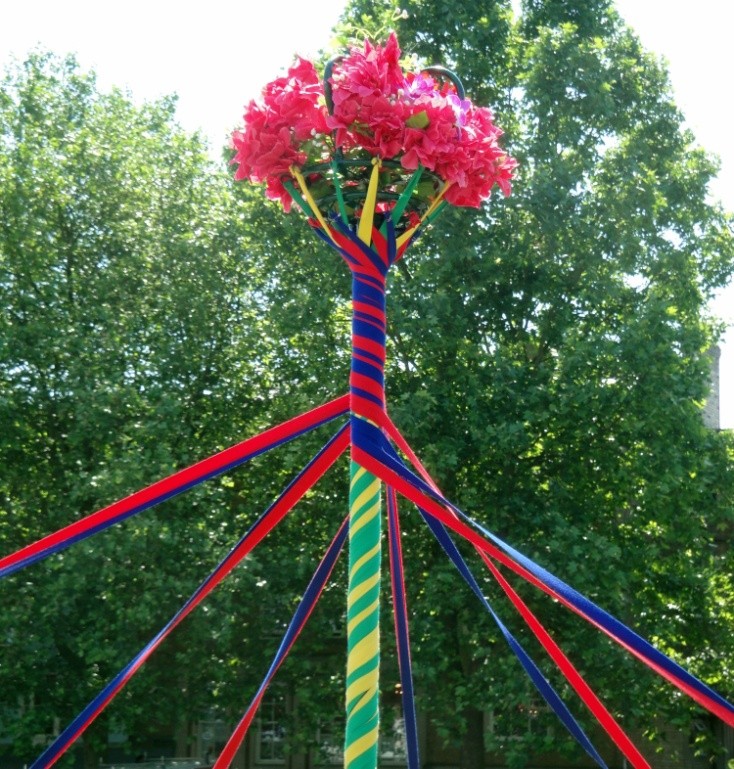
Dancing at May time is an old custom, common in many cultures, to welcome in the summer, and probably began by dancing around a significant tree or bush in the village. In Europe, from mediaeval times, the maypole was a tall tree trunk bedecked with greenery and hoisted onto the village green at the beginning of the festivities.
Many maypoles were destroyed during Cromwell’s rule as being ‘heathenish vanity…’ but erected again in Charles II reign. The tallest was in the Strand, London, standing at 130 feet.
The custom of dancing round a maypole with plaited ribbons became popular from the middle of the 19th century, and was given a boost when it was introduced as part of a May Day revival to the teacher training institution, Whitelands College, in 1881, guided by John Ruskin; this led to its widespread dissemination by school teachers across the nation’s schools. The idea possibly came from choreographers in the theatre, introducing elements from wider European practice.
The weaving of ribbons around the maypole became popular throughout the country. Today, maypole dancing is performed by a variety of ages in schools, community celebrations, and other festivities.
Maypole crown
The Full English Folk Marquee, Big Weekend, Cambridge, July 2013
Photo: EFDSS; Photographer: Frances Watt