


“Tradition is not the worship of ashes, but the preservation of fire.” Gustav Mahler
After a warm welcome from Kerry Fletcher (Folk Education Network Coordinator) time was spent allowing all the participants to introduce themselves. The event drew participants with a massive range of overlapping interests including puppetry, theatre, storytelling, morris and social dancing, music, working with children, projects for people from all sorts of communities. By the end I already had a list of people I wanted to meet during the day.
Steve Rowley (Freelance Folk Artist) set the scene for the day giving us a tour of a wide range of projects he has led over the years. These ranged from morris dance sides, school dance projects, community events, local carolling traditions. Alex Merry (Boss Morris, Artist and Illustrator) talked about their collaboration with Steve, in which he shared his knowledge of the morris tradition and encouraged Alex and her team of dancers and musicians to take flight with a new vision. Boss Morris is built on tradition but has created something fresh and different, rooted in the local Stroud area.
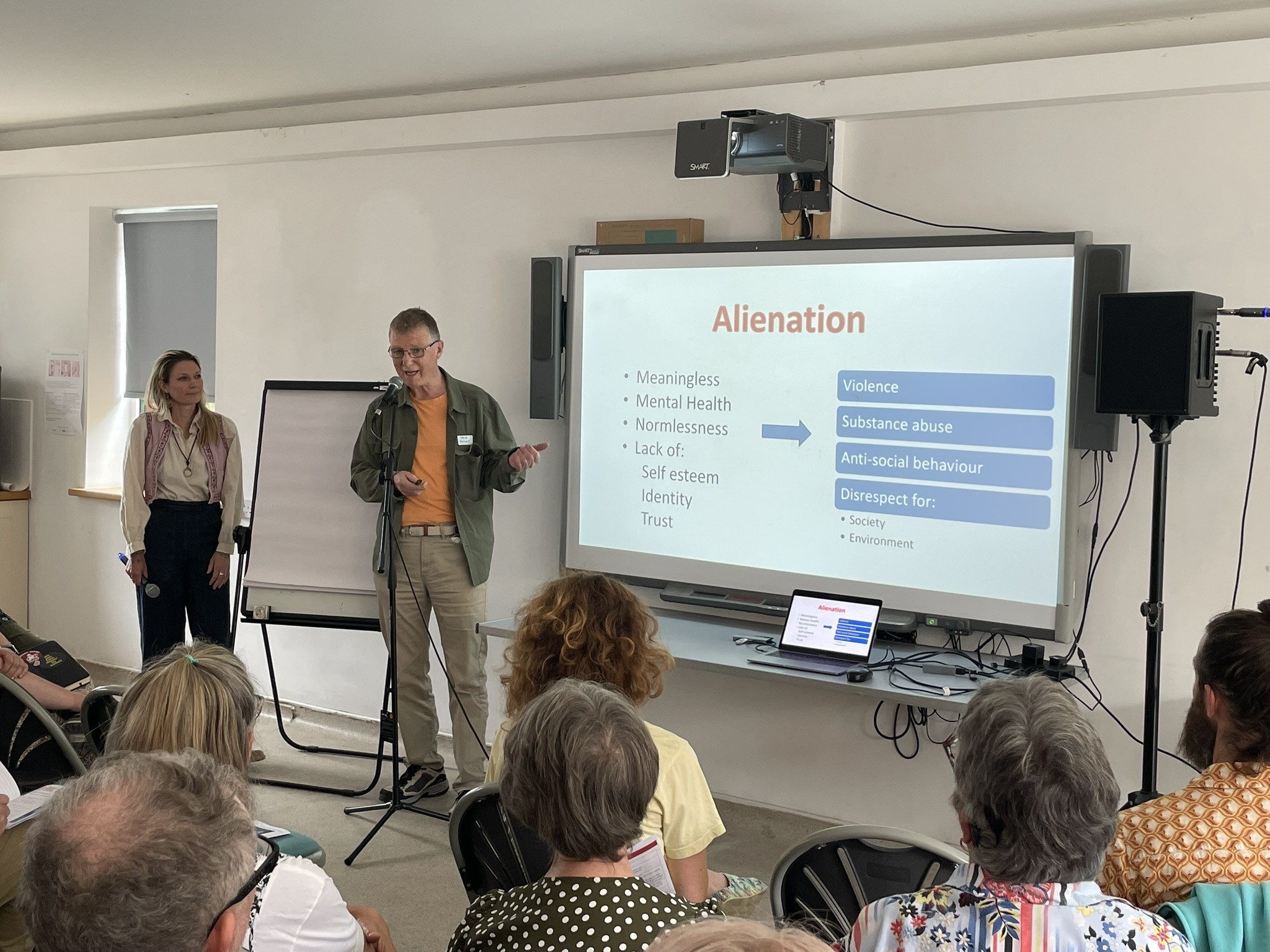
Steve described cohorts of people coming to the folk arts, developing their own styles and interpretations of traditional material, then over years gradually shifting to supporting new people to learn and develop new things. He advises building legacy into projects so that they have longevity saying: “Share what you know, but don’t make yourself special”. Lots of established morris sides work hard to recruit new members, and yet there are new sides popping up all over the place engaging younger people. They are all taking our tradition forward.
The day made me think about some of the projects I am involved in. It is beguiling to be central to things and to feel essential. However, Steve’s presentation was a clear message to “leave your ego at the door” and focus on the future of the projects. Steve talked about leaving resources in place that people can use without you and draw people into bringing their own ideas to life. That way they have true ownership over it. The wonders of the web give us lots of opportunities, the GlosTrad archive www.glostrad. com, another of Steve’s projects) is an example of making local traditional materials easily accessible. Alex talked about Boss Morris’s project taking morris dance into schools and the beautifully illustrated resources they have been leaving with the teachers and children. I really need to learn how to get some of our local materials onto a website or find someone to help me! I have a tunebook to revamp soon. I’m going to focus it a bit more on local tunes and get my group to choose what goes in.
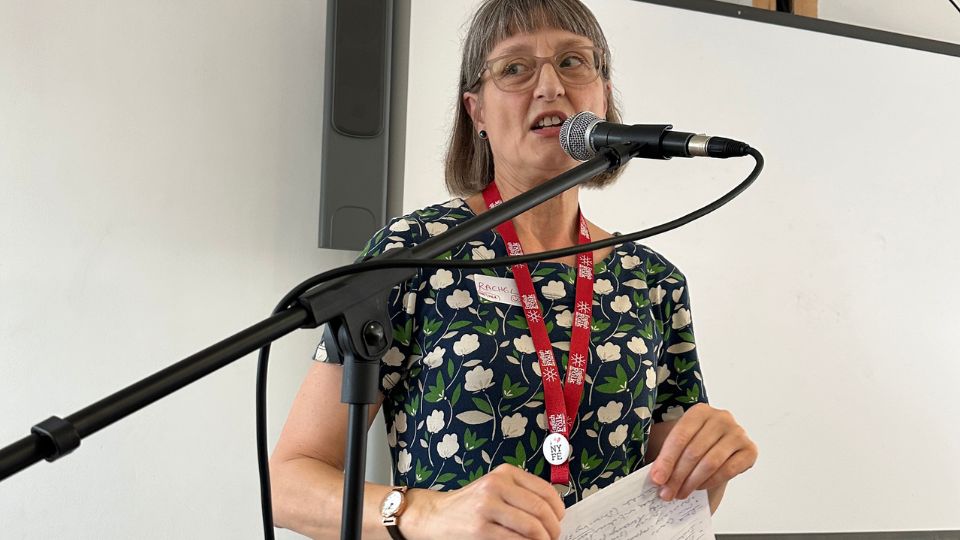
There were several English Folk Dance and Song Society (EFDSS) staff at the day, it was great to meet a few in person. Before lunch Rachel Elliott (Education Director) introduced them all and gave us a whistle stop tour of EFDSS workstreams. A lot of it I was vaguely aware of, but I was amazed by of the breadth of it all. I think I have been a passive consumer of the EFDSS output, and my ‘to do’ list from the day includes delving more into their online learning resources www.efdss.org/resourcebank and materials from the Folk Education Network’s archive of past events. Rachel also recommended the online materials from the Vaughan Williams Memorial Library efdss.org/vwml and engaging the help of their Librarians.
Rachel told everyone that from the autumn EFDSS will be publicly announcing the change of its trading name to Folk England.
The long lunchbreak was a great opportunity to admire The Folk of Gloucester and appreciate Gloucester’s seagull population. It gave me a chance to catch up with people with interests overlapping with mine, and I made a couple of contacts that I hope will be mutually beneficial.
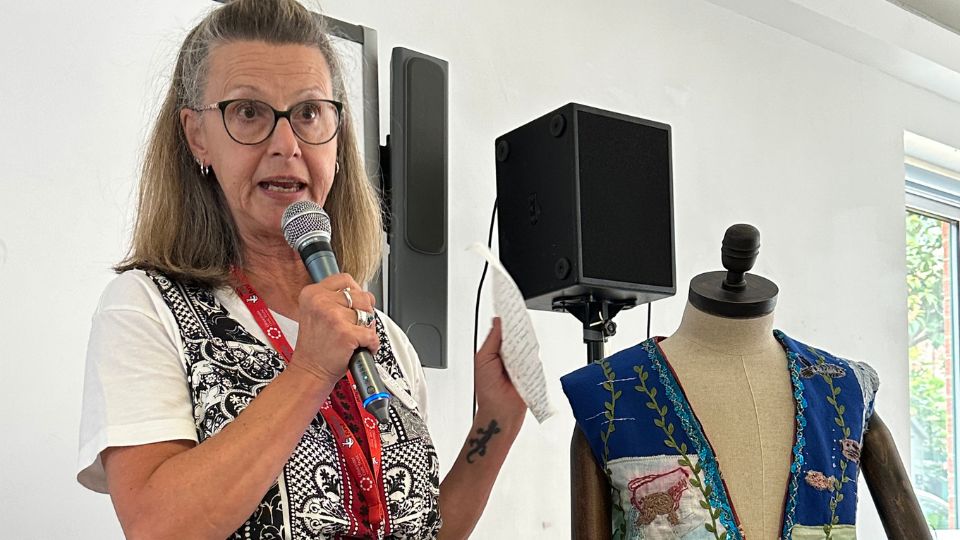
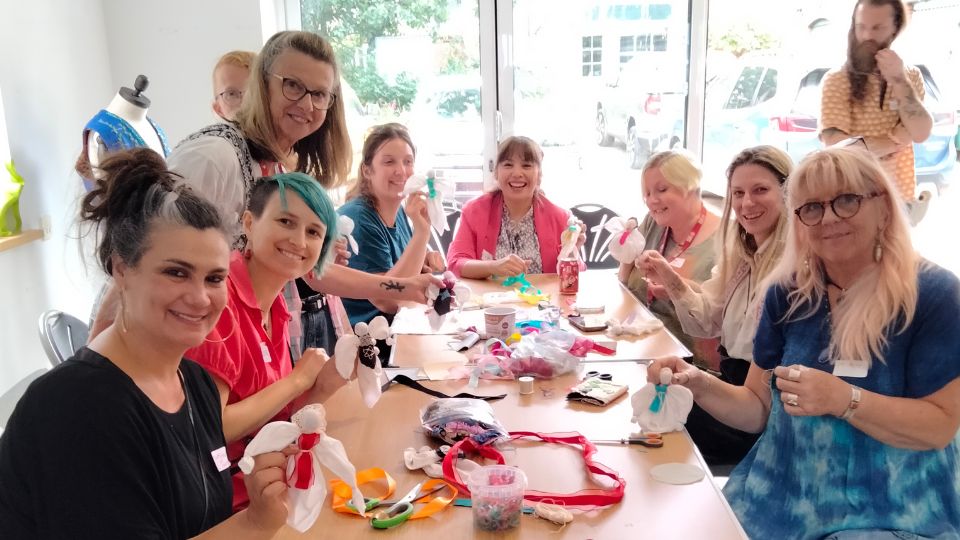
Over lunch Ally Goff (Community Textiles Artist and Facilitator, and resident Artist at The Folk of Gloucester) hosted a crafting activity for people to join in. Ally provided a warm welcome, enthusiasm, ideas and materials, and a bit of a confidence boost, then encouragement to make the task your own. Some people crafted and nattered, others were quietly absorbed in the task. Ally started people off, but gradually as new people joined, they passed information on to newer starters. After lunch Ally talked about many of the community arts projects she has worked on with groups based around The Folk of Gloucester, everything from lantern making, stitching books, creation of wall art, to new costumes for Boss Morris. Ally displayed the most exquisite waistcoat and pockets, explaining how the designs referenced historical costume and folklore. I haven’t really appreciated the ways in which the visual and creative arts can meld together with music and dance as part of a whole. More food for thought for me.
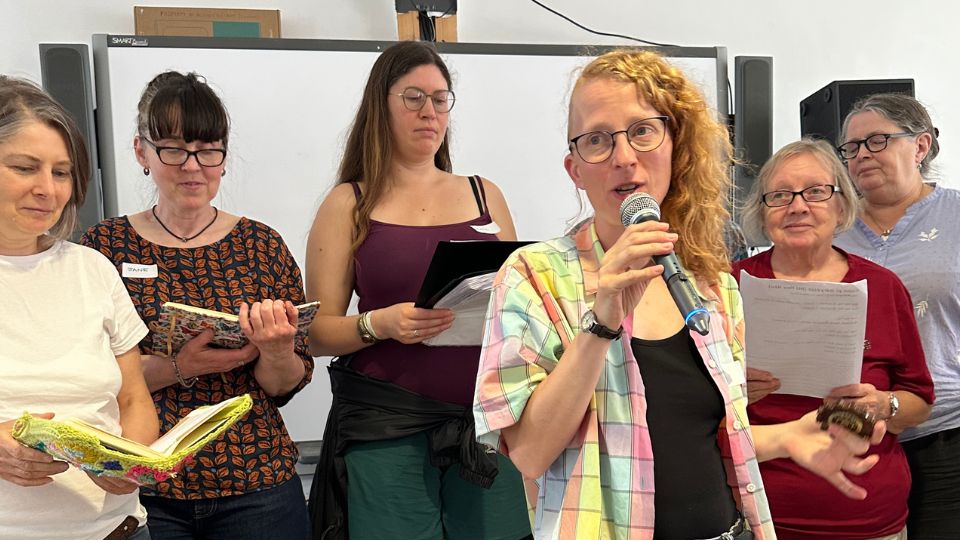
After a performance by members of the Gloucester Folk Choir, Sorrel Wilde (Gloucester Folk Choir and Island Folk Choir) soon had us on our feet singing together. Sorrel talked with such passion about watching new choir members arriving “with a timid voice, shaky pitching, or no musical confidence, and a year later they’re singing with strength, accuracy, and joy. People are often so busy enjoying themselves that they don’t notice how much they’ve learned.” Beyond the musical experience Sorrel described the community formed through singing together, which she nurtures by holding a space which is non-competitive, non-judgemental, and focussed on connection. There were strong parallels with Ally’s community group working with textiles.
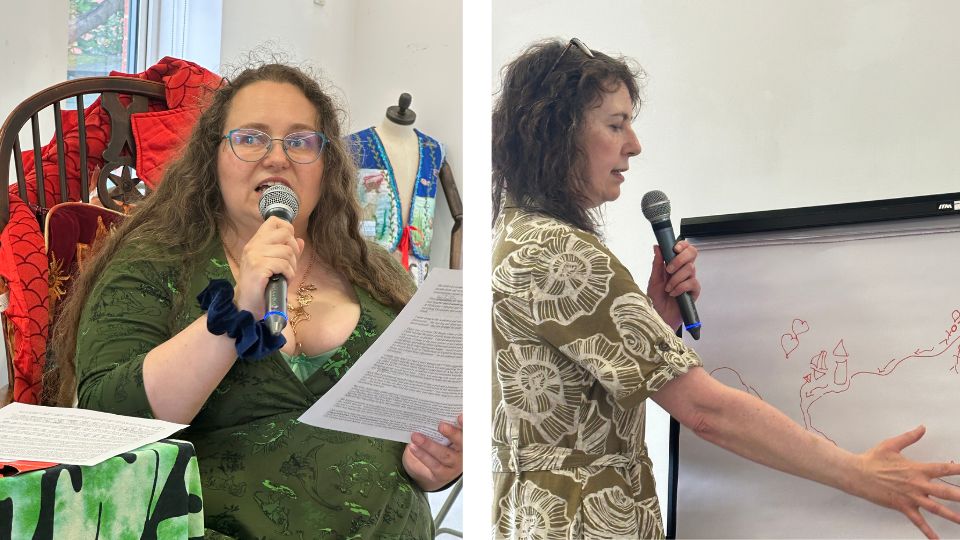
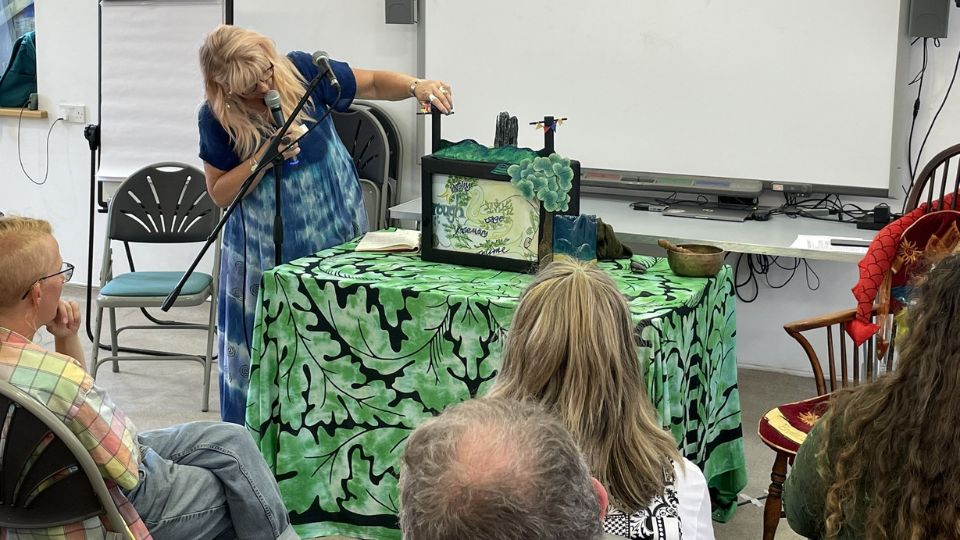
There was no chance for energy to dip as the last section of the afternoon featured storytellers from the Gloucestershire Storytelling Café. Weaving a tale of magic and resilience Sarah Snell-Pym drew us into her tale of their storytelling café living on through the storms of the pandemic and the loss of their leader and inspiration, Chloe Lees. Sarah demonstrated the power of a carefully crafted story to transport you to a world where dragons are tamed, chairs become bardic thrones and the inspiration of leaders whisper through time to the people who share a history. Again, textiles were part of the tradition with the chair adorned by a dragon and a specially commissioned cushion crafted from Chloe’s costumes. Jane Springham gave us a peek into the mechanics of developing a story and Debbie Gordon held us spellbound as she illustrated her tale with a cranky. A cranky is a box with a long paper picture wound onto two spools, and the storyteller turns the cranks to move the illustration along with the story. Chloe Lees leaves the sort of legacy Steve had been describing, and Debbie, Sarah and Jane are tending a magical storytelling fire.
I came away from the day with renewed enthusiasm and a long list of people, and resources to follow up on. People attending the day were all working in different ways to preserve and develop our tradition and EFDSS is providing us all with incredible resources, training, and support to do it. Thanks to you all for delivering a dose of enthusiasm and inspiration on my doorstep. Now, onto my “to do list”!
by Polly Stirzaker
Polly Stirzaker, she/her, amateur folkie. I play box for Lassington Oak Morris Men, Fern Ticket Morris, and whistles and bagpipes with the band Cobblers Child. I am a ceilidh caller and enjoy all sorts of dancing. With others I run a monthly slow session for beginners and intermediate players to help them develop the skills of playing by ear and joining in local session music playing.
Email: [email protected]
Photos by Ciaran Trevana and Liberty Rowley for EFDSS
