


English Dance and Song April 2026
This news item is based on articles in English Dance and Song, the magazine of the English Folk Dance and Song Society. The world’s oldest magazine for folk music and dance, EDS was first published in 1936 and is essential reading for anyone with a passion for folk arts.
Morris dancer, Obeah woman and author Emma Kathryn explores the modern face of folk dance.
I was not lucky enough to be raised in the folk dance world. Although I’d written about folklore for a while, it wasn’t until my late thirties that I became interested in morris dancing. I was in Stroud with the BBC Witch team, preparing for a talk as part of the Neo Ancients festival, and the now widely known Boss Morris gathered and began to perform. I had always been aware of morris, growing up in a rural town in Nottinghamshire, but never had I seen it quite like this! It was brilliant. When I got home, I found
a local side and just turned up for a practice. The next day, I danced out with them at the local county show – and haven’t looked back.
I adore morris dancing; it’s so joyful and amazing fun. We never fail to have a laugh at practice (and often at ourselves). The morris dancing community is special to me. As a mixed race woman, there’s always that feeling about moving in different spaces, wondering if you’ll be welcomed. Sometimes that’s based on my own preconceived ideas, sometimes through the lens of experience. However, the morris world has been very welcoming, embracing me as much as I have embraced it. Everyone is always friendly, helpful and non-judgmental. It feels like a bit of a homecoming.
Morris dancing, like all folk practices and traditions, has historically represented the areas it was developed and grew in, and the people who practised it. It might make sense then, that a traditional view of morris dancing includes rural locations and dancers who were predominantly white, and mostly men. But how does this idea of morris dancing compare to today? And what are the implications for traditional folk dances in England today?
Preserving Tradition
Cecil Sharp and Mary Neal’s morris revival of the early 20th century aimed to preserve and restore morris dancing. The idea of preserving tradition is just one of the areas the Morris Census explores, asking the question of whether or not tradition is important. Figures suggest that around 40% of sides agree that preserving tradition is important. However, that position seems to be one that is changing.
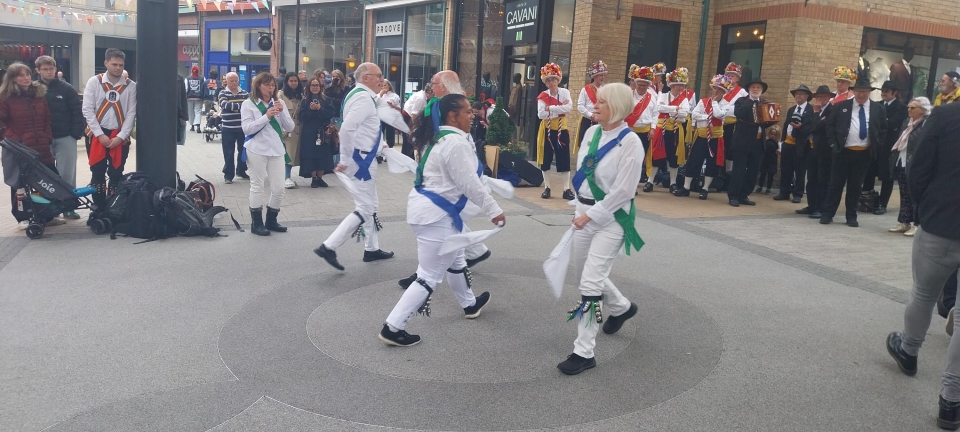
But what does it mean to preserve something? The term ‘preservation’ suggests something remaining unchanged, frozen in time and place. However folk, whether folklore and stories, or practices and traditions, are alive, carried and practised by living people, tied to living landscapes in real time. They are like living tapestries where we each weave our own threads into them. They tell the stories of our communities, in all their wondrous variety and diversity, and are the antithesis of monoculture. Folk is created by the people, for the people and recognises the joy, magic and life of the everyday.
I see the idea of tradition being something more fluid in my own side, Trentside Holmes Morris, of Sutton on Trent near Newark. We are a traditional Cotswold side, and yet often modify traditional dances. Sometimes those modifications are made due to numbers performing a particular dance, such as adding grand chains to the beginning of dances traditionally performed by six dancers, thus allowing it to be danced by four.
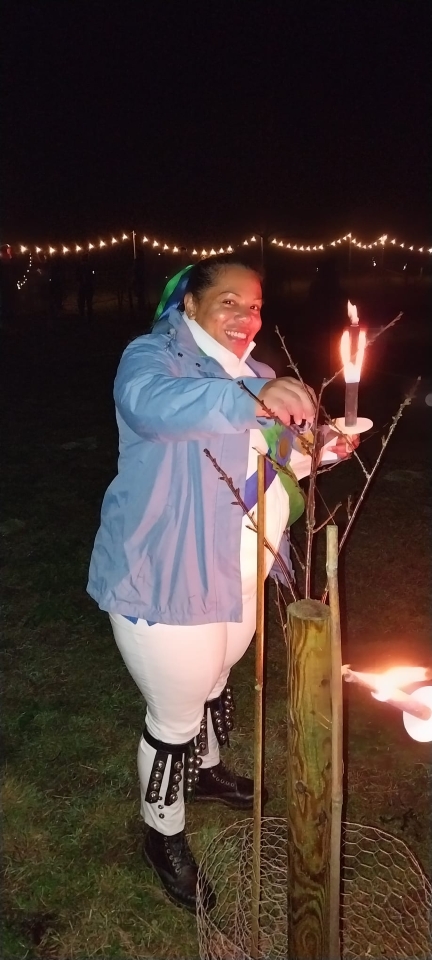
But it’s not only individual dances that change. New traditions are formed using morris as the vehicle for that change. Folklorist and folk artist, Lucy Wright is responsible for the relatively new morris tradition of Dusking. While it is a new, and in Lucy’s own words,
‘totally made up’ tradition, it does have historical links, drawing parallels with the tradition of dancing the sun up at Beltane, which occurs on May Day morning. Dusking is the inverse of this, and involves dancing the sun down at Samhain, occurring at sunset on 31 October.
Diverse Dancers Today
Not only do traditions shift and change, but so do those who are doing the dancing. In 2023, for the first time since the Morris Census started, there were more female dancers recorded than men. Boss Morris have played a significant role in bringing the tradition into the mainstream – including performing at the Brit Awards in 2023 – and showing that change and tradition can
go hand in hand.
This year, the Joint Morris Organisation introduced the Morris for All badge, showing support for diversity, ethnicity and inclusion within morris, particularly around sexuality and gender identity. Sides like Ramshackle Morris already bring together neurodivergent and queer young adults in an openly inclusive space.
Data from the Morris Census also shows a gradual increase in dancers from ethnic backgrounds other than white, with the largest rise occurring between 2020 and 2023. While these numbers remain small – and dancers from the Global Majority are still significantly underrepresented compared to the wider population – the change is still encouraging. As a mixed race British woman, it has been heartening for me to see Global Majority people like Angeline Morrison and Zakia Sewell represented in morris. I hope their presence inspires young people from the Global Majority who may be curious about morris, or who may previously have felt
it wasn’t for them.
We’re also seeing a welcome diversification in other areas of folk dance, including Linett Kamala’s Basstone Maypole Project, which fuses Jamaican and British maypole dancing traditions with a modern twist, and the hip hop and folk fusion of Folk Dance Remixed.
While tradition is important, ensuring that it remains rooted in the land and reflective of communities means that diversity plays an essential role. Like all folk, morris dancing is for everyone!
Find out more about Emma: emmakathrynwildwitchcraft.com
Ramshackle Morris Instagram: @ramshacklemorris
Trentside Holmes Morris Facebook: trentside.holmes
Lucy Wright: lucywright.art
Morris Census: morriscensus.uk
