


English Dance and Song December 2025
This news item is based on articles in English Dance and Song, the magazine of the English Folk Dance and Song Society. The world’s oldest magazine for folk music and dance, EDS was first published in 1936 and is essential reading for anyone with a passion for folk arts.
Following its autumn premiere, we report on the new film featuring the Vaughan Williams Memorial Library’s collections.
A new short film, A Basket Full of Eggs, produced by Patrin Films Ltd and funded by the University of East Anglia’s AHRC Impact Accelerator Award (AH/X00344/1) as part of the ongoing project, ‘Romani and Traveller Voices in Music Archives’, was given its premiere at the Ake Dikhea? International Festival of Romani Film in Berlin in October. The Vaughan Williams Memorial Library is a partner in the project, which aims to reconnect communities with their cultural heritage through raising awareness of, and increasing accessibility to, the archive’s documentation and recordings of Romani folk singers. It also serves to shine a light on the contributions made by these communities to the development of folk song in England.
The film follows the personal journey of Romani filmmaker and advocate Liza Mortimer into the archives, where she uncovers recordings and stories of Minty Smith, her great-grandmother, and other Romani folk singers who played an important role in helping preserve England’s traditional folk songs. She was searching for a glimpse of her great-grandmother’s life but what she found was far more than she expected: a rich, interwoven legacy of Romani voices, songs, and cultural influences.
“Hearing my family’s songs and voices in the EFDSS archives has filled me with a deep sense of pride,” says Mortimer. “I began by searching for my family’s story, but I discovered a collective legacy far greater than I imagined. This film is a powerful reminder that our stories are not just personal – they are part of a rich collective history that we must now reconnect with.”
This film is more than a tribute to one family’s past. It’s a call to recognise Romani and Traveller people’s people’s enduring influence on the cultural soundscape of Britain. It aims to highlight the central role Romani and Traveller people played in the oral transmission of folk songs – songs that now many consider “traditional English music.”
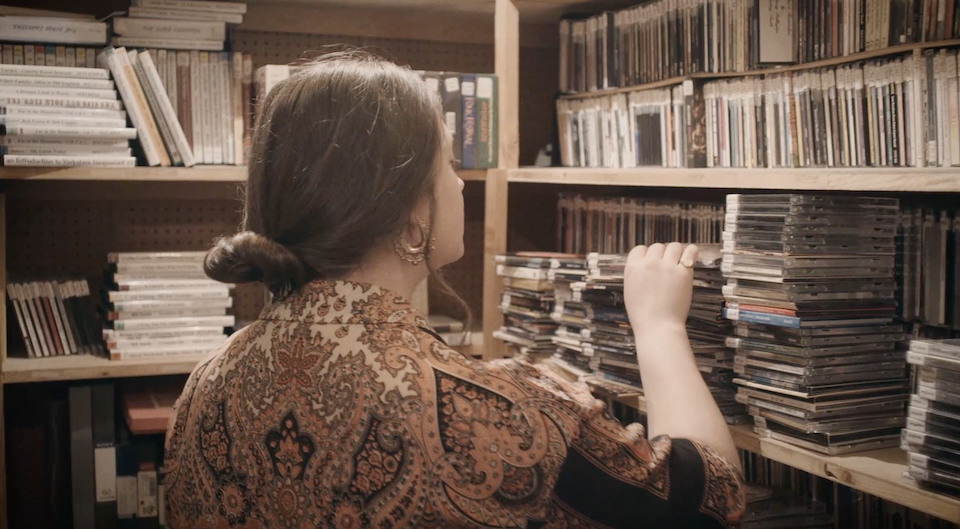
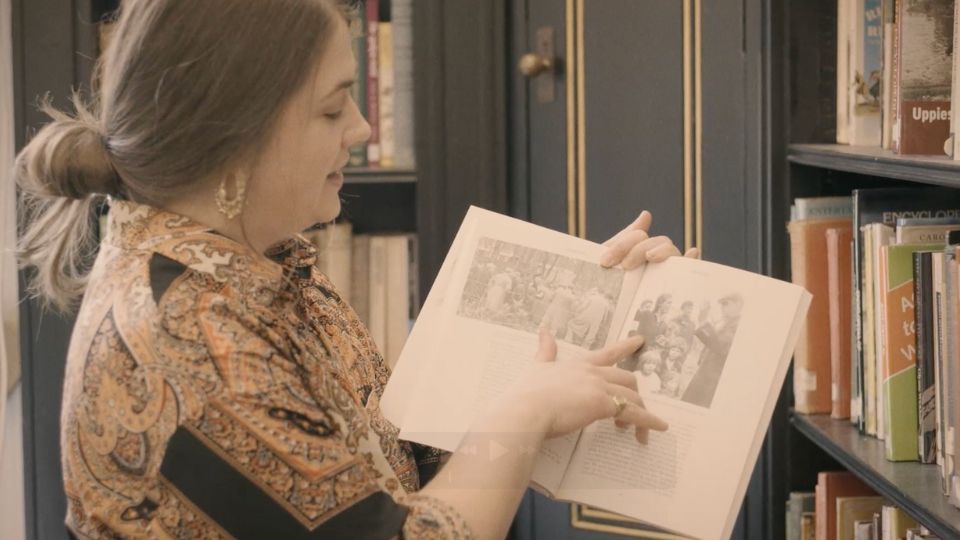
Tiffany Hore, EFDSS’ Library and Archives Director, features in the film, discussing several rich historical records of Romani singers between the shelves of Cecil Sharp House. Among these are items from the Cecil Sharp Collection. In August 1907, Sharp encountered 26-year-old Romani woman Betsy Holland in Withypool, on Exmoor, and the meeting is recorded in an ebullient letter he sent to his wife, Constance:
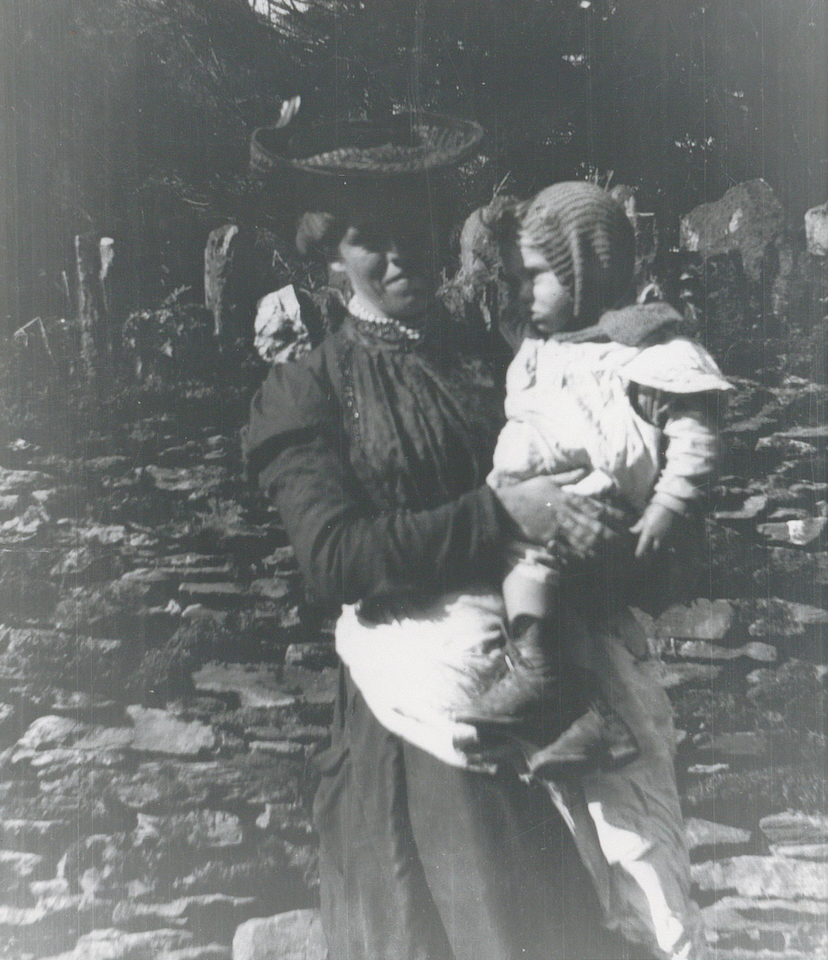
‘We…were just wheeling our cycles up the hill when …(we met) Betsy Holland, aged 26, … (who) began a murder song that was just fascinating. Talk of folk-singing! It was the finest and most characteristic bit of singing I had ever heard. Fiendishly difficult to take down, both words and music, but we eventually managed it! I cannot give you any idea what it was all like, but it was one of the most wonderful adventures I have ever had. I photo’ed the baby and her…’ (ref CJS1/12/18/10/61).
 Betsy Holland
Betsy clearly made an impression, and Sharp even went to meet her a second time, collecting a further three songs. We are fortunate that he, unusually amongst first revival collectors, often photographed his singers, meaning that we also have a pictorial record of the initial encounter. He took several pictures of Betsy, one with the baby mentioned in the letter, who would have been her third child, John. Another shows her seated in a bender tent, with her two eldest boys Thomas and Joseph, aged 6 and 3.
Unfortunately, we do not have a recording of her singing, but the VWML does own two wax cylinders featuring another Romani singer, Priscilla Cooper, whom Sharp met in Stafford Common, East Devon, later in 1907. While the quality of the recordings is as poor as you might expect given their age and the fragility of the format, they offer a tantalising window into a time and place. Digitised versions can be heard on the VWML archive catalogue.
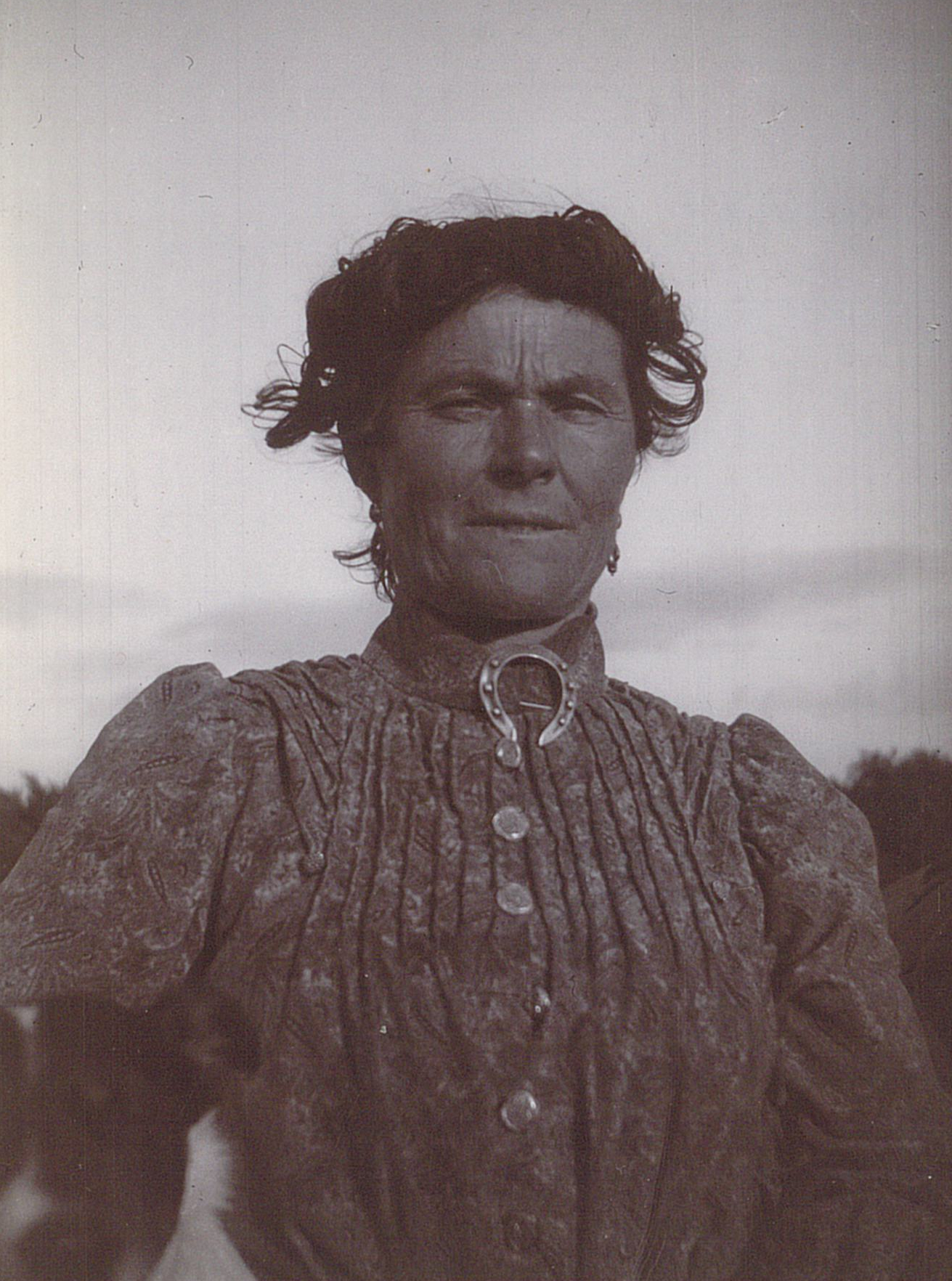
Priscilla Cooper (1907), whose voice lives on in Cecil Sharp's early folk recordings.
The importance of illuminating the stories and history of Romani and Traveller people in the British Isles has never been more stark. Travellers are indigenous to Ireland and Scotland, and Romani people have been present in Britain for around 600 years. Yet the immense contributions these groups have made to our shared folk heritage are seldom recognised, while popular media portrayals of so-called ‘Gypsy music’ draw on exotic myths and stereotypes popularised in nineteenth century romantic literature and art.
For Hore, this project fits ideally with the VWML’s ongoing mission to reappraise its collections at a time when library and archive professionals are interrogating the histories which shaped their holdings. There are many reasons why certain groups have been marginalised in library and archive collections, many of them related to subject thesauri and classification schemes which were often created at a time when Britain was still a colonial power with a very different mindset. However, there are also very practical reasons why the contribution of Romani and Traveller singers to English folk song does not emerge as one searches the VWML archive catalogue; there is no subject indexing and no field which records characteristics such as ethnicity. Searching for ‘Gypsy’ yields 856 results, but these are all for songs with the word ‘Gypsy’ in the title or the first line; none indicate the background of a performer.
The library, as opposed to the archive, catalogue does not share this problem as it has an inbuilt thesaurus of subject headings. The VWML developed primarily as a library based on the book collection of one individual, Cecil Sharp, and without an archive. When archive collections were gradually left to the library, items were treated in the same manner as library materials, and indexed for songs and dance tunes, ignoring the traditional archival descriptors. During the ‘Full English’ project, which started in 2012, name and place authority files were added so that users could search for people and locations, but a subject thesaurus was not added, and there is still no way of searching for the ethnicity or cultural background of a performer. There is little chance of this being added as things stand, without extra personnel, money and a lot of time.
The only way to find recordings of Romani and Traveller singers is to know some names before you start, which requires further research using the library catalogue, or knowing someone who can tell you. The outputs of the current project aim to overcome this by giving people those names and linking them to records, sound files and photographs without the need for prior knowledge or advanced agency.
The project, in which the VWML works with researchers from the University of East Anglia and the University of Sheffield, began in 2022. The team began by collaborating with Romani poet and academic Dr Jo Clement, who produced a free resource introducing some of the relevant collections. Using QR codes connecting photos with recordings, the resource was particularly aimed at making the library and archives more accessible for people exploring their family histories. The resource is available for the EFDSS Resource Bank (https://www.efdss.org/learning/resources#). A Basket Full of Eggs further explores Romani and Traveller people’s role in shaping folk song in England, this time through more personal lens. The underlying issues around Romani and Traveller voice in archive collections is addressed in detail in an academic article (open access at https://mm.journals.qucosa.de/mm/article/view/25/67) written by Prof Hazel Marsh, Dr Esbjorn Wettermark and Library and Archives Director Tiffany Hore.
A Basket Full of Eggs will be screened with Q&A at Cecil Sharp House, and in various other cities and venues over the coming months, before being uploaded to the VWML and Travellers’ Times websites later in 2026. For details of forthcoming screenings or for further information, please contact [email protected]
The film was funded by the University of East Anglia’s AHRC Impact Acceleration Award (AH/X00344/1) as part of the project ‘Romani and Traveller Voices in Music Archives’
Patrin Films Ltd is a Romani-led production company with a mission is to amplify the visibility of Romani identity, language, and culture through documentary and scripted narrative.
